Recent Content
Releasing a Syngo Carbon version for Mac OS Sequoia
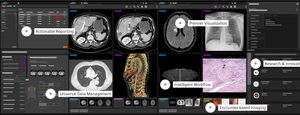
With Syngo Carbon you step into the next generation of enterprise imaging IT. Syngo Carbon is future-proof – an imaging solution which will evolve and expand over time. That's why that would be very cool to have it on Mac OS latest version7Views1like2CommentsAccessing health data
AI relies on accessing and correlating a large amount of high-quality data. The data models incorporate factors like state of health, medical results, and clinical studies. Clinical standards for treatments defined by medical associations are also used to develop computational models and their architecture. Our work primarily focuses on key clinical indications like cardiovascular diseases, cancer, and neurological diseases.3Views0likes0CommentsIdentifying medical needs
Algorithms can automate routine tasks, and that’s a great asset when it comes to making healthcare more efficient and effective. We focus on developing scalable solutions that help physicians improve the quality of diagnostics and therapies, especially in the areas of cardiology, neurology, and oncology. To identify valuable innovations that can be integrated in clinical routines, we collaborate with leading medical institutions around the world. 15Views0likes0Comments

Managing data around patient with Syngo Carbon instead around departement
In typical clinical pathways, patients have several touch points with different clinical departments. To make the correct diagnosis and therapy decision, it is essential that patient-data remains open and always accessible from one spot.4Views0likes0CommentsSeamless data exchange in healthcare
1 MIN READ Why read this paper? Providing effective, high-quality healthcare demands greater integration—more seamless sharing of information between hospitals, within networks, and even across international borders. Efforts are underway in Southeast Asia to enable more streamlined healthcare data exchange as part of a commitment to improve efficiency and enhance collaboration. Just one example: greater consistency in standards and platforms to reduce the need for costly patient retesting. Progress demands collaboration between providers and governments, as well as the active support of experienced technology suppliers. Learn more about the opportunities which are being explored in ASEAN to build interoperable digital health systems across borders. Key takeaways Frictionless, secure data exchange is key to leveraging the benefits of digital transformation Interoperability can increase efficiency and ease workforce burden The first step is to establish a framework of shared standards for data exchange Cross-border interoperability would allow ASEAN health systems, their workers, and their patients to benefit from easier, more efficient processes3Views0likes0CommentsExcellence through optimized operations
1 MIN READ Why should you read this paper? Achieving operational excellence will help health systems meet the rising patient demand despite the challenge of dwindling workforce availability. The rapid development in digitalization, data, and artificial intelligence technology gives us reasons to be optimistic about the future of healthcare as these technologies are instrumental in advancing healthcare operations. This paper shares concrete solutions that exist today to help healthcare professionals do more with less, as well as provides insights into what the future holds in achieving operational excellence in healthcare. The three broad strategies for achieving operational excellence are: Enabling care teams to focus on what matters most Embracing and utilizing new models of work Ensuring technological and operational sustainability11Views0likes0CommentsTraining the algorithm
We develop scalable AI-powered solutions, and that’s why we maintain a robust infrastructure that includes supercomputing capabilities and a data lake. The quality and volume of the data used for training directly impact the accuracy and effectiveness of the algorithm's predictions.2Views0likes0CommentsDeveloping a computational model
Algorithms are computational models created by a team of data engineers, medical scientists, and programming experts. Each application is uniquely designed to answer a specific question and automate its clinical routine process. Basically, it compares the (health) data with the probability of (clinical) outcomes. We hold over 1,100 patent families related to machine learning, with more than 550 of these pertaining to deep learning.3Views0likes0Comments